01
Create your AgentPM workspace
Start by creating an account. Then create an org for your project and add a data source so AgentPM knows where your coding-agent sessions should land.
Create accountAgentPM gives vibe coders agent continuity: move between agents, sessions, and models while keeping the full story of what happened, why it happened, and what to do next.
Vibe coding feels amazing until a model runs out of tokens, a session ends, or you want a different agent to continue. AgentPM keeps the work trail intact so the next run can start from reality, not vibes alone.
The flow is simple: create an account and org, add data, install the agent where work happens, install the skill, and ask your coding agent to retrieve context before it plans.
Start by creating an account. Then create an org for your project and add a data source so AgentPM knows where your coding-agent sessions should land.
Create accountFrom the org landing page, click Add data and keep Install directly to this org selected. Copy the command AgentPM gives you.
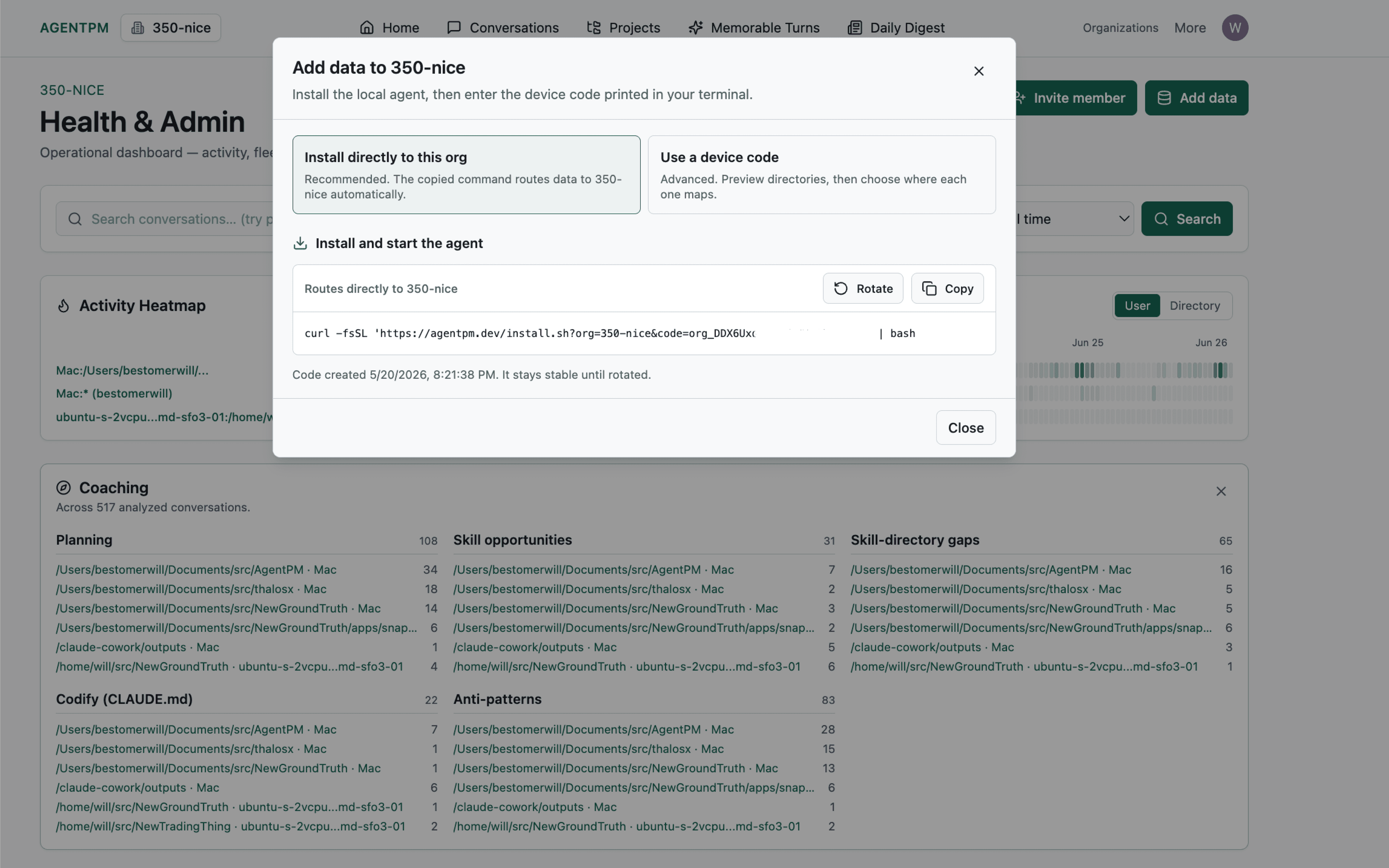
Paste the org-scoped install command into the terminal on the laptop, dev box, or server where your coding agents run.
$ curl -fsSL 'https://agentpm.dev/install.sh?org=my-org&code=oic_...' | bashDownloading agentpm...Installing local agent...Starting AgentPM capture...ok: agent installed and connected to my-org
Install the AgentPM conversation skill so Claude Code, Codex, Cursor, Grok, OpenCode, or the next tool can ask AgentPM what happened before.
$ agentpm skill installinstalled skill=agentpm-conversations
Start the next agent inside the repo you are already working in. Before it plans or edits, have it ask AgentPM for the current checkout's recent work, risks, and open tasks.
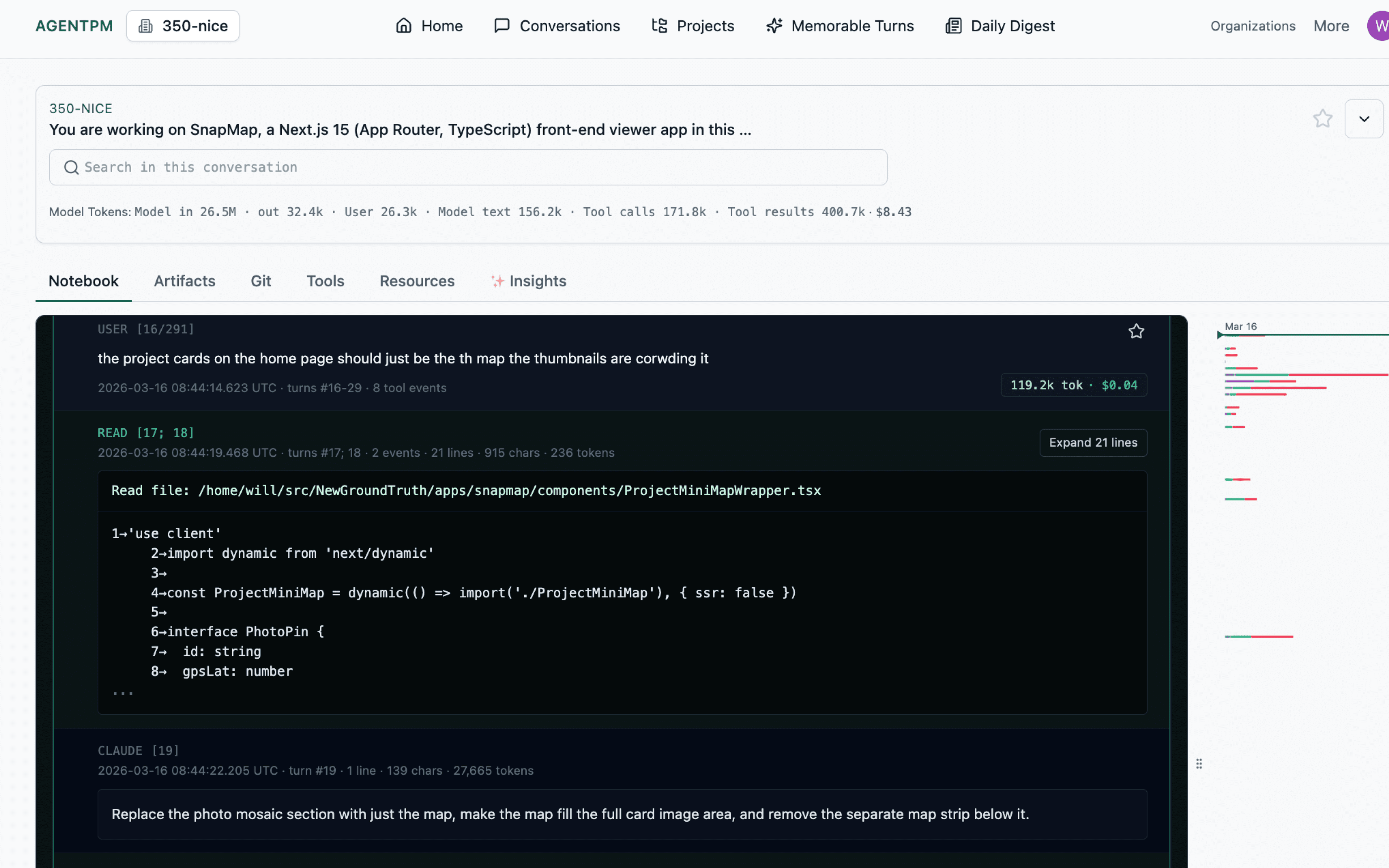
Open the AgentPM notebook to search conversations, inspect turns, and verify the tool calls behind a handoff.
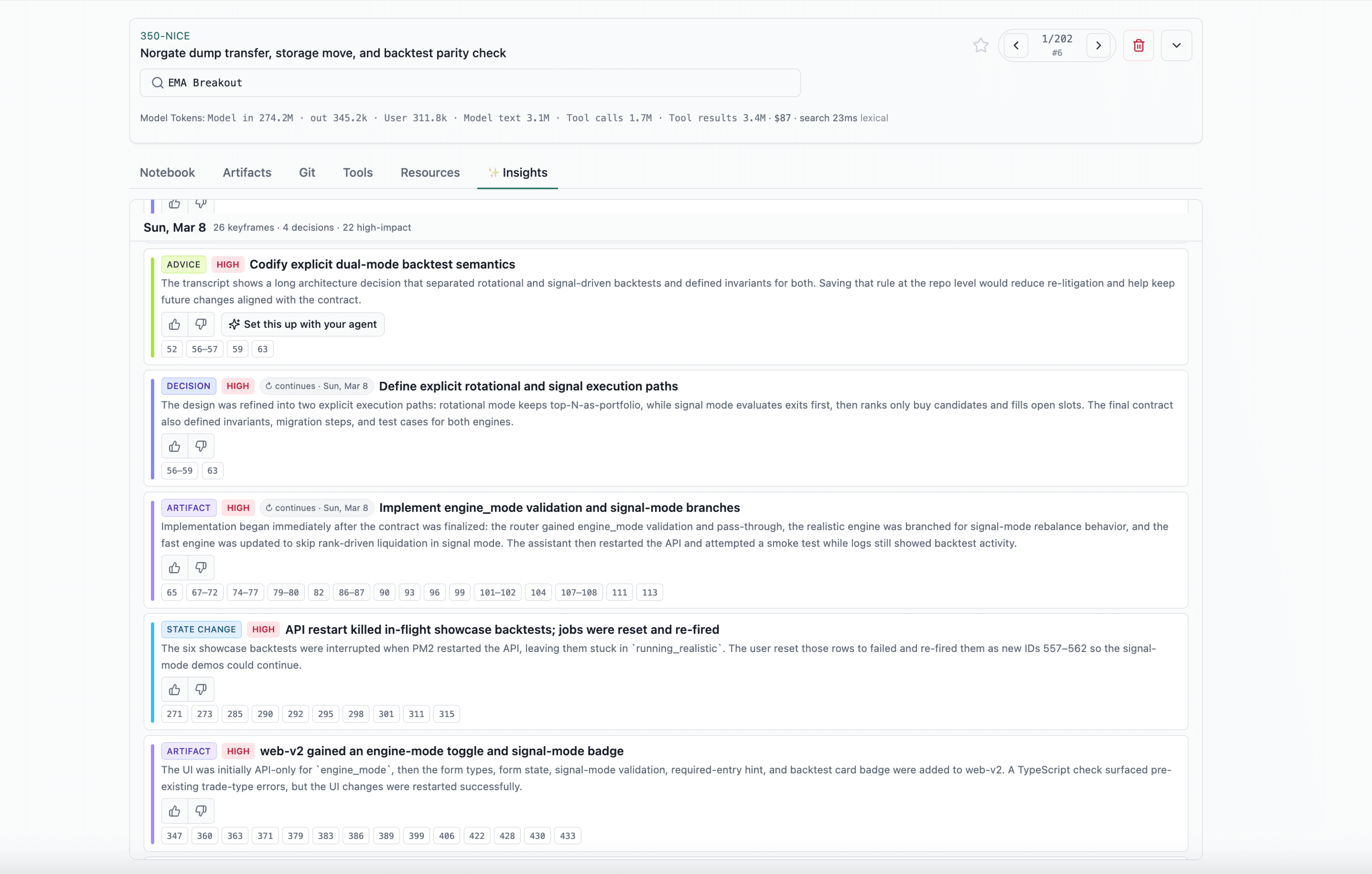
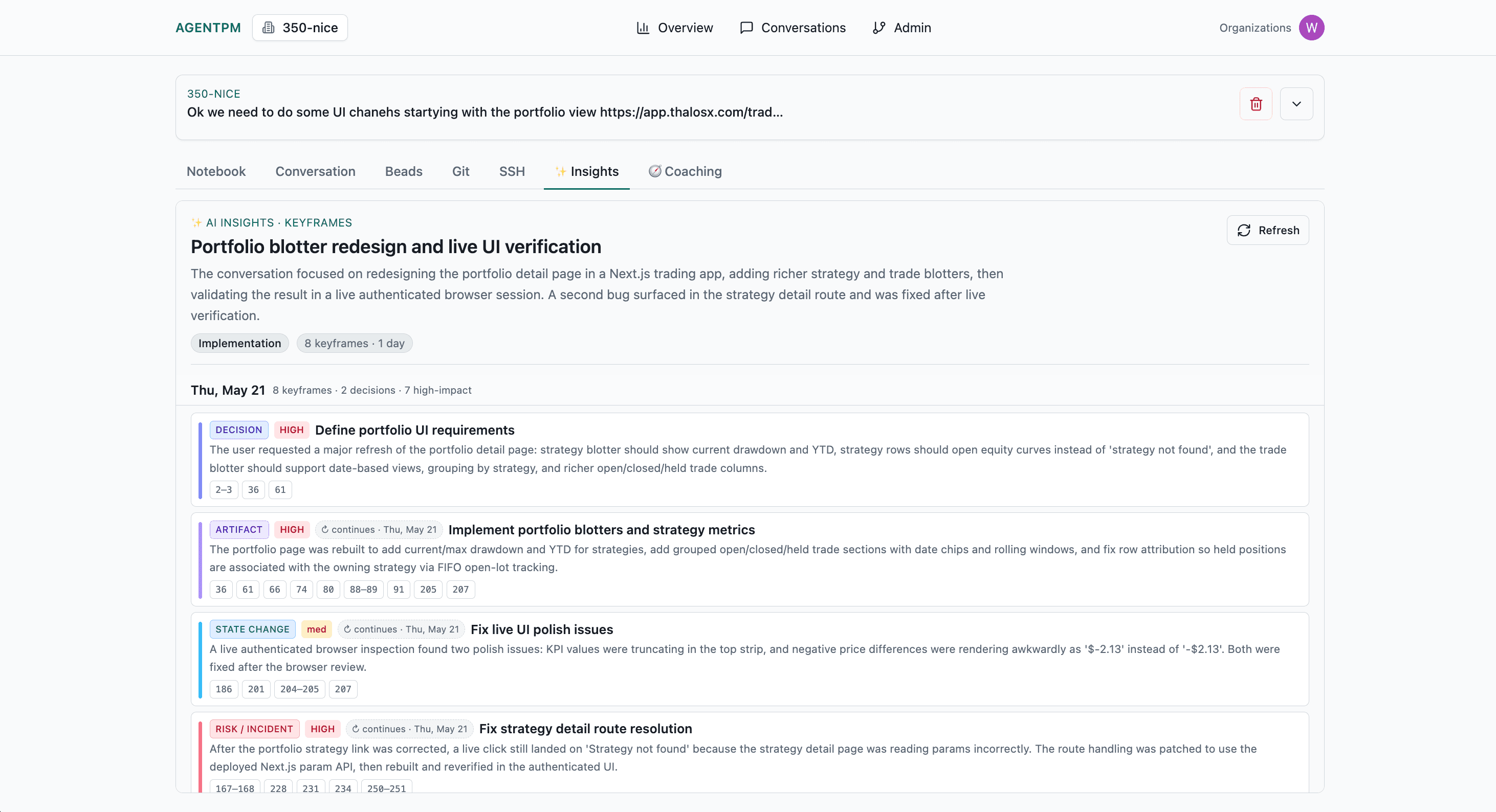
Use insights to see decisions, risks, outcomes, and advice without rereading every token of the previous session.
The habit is simple: when you switch agents, reopen a stale repo, or come back to a feature, tell the coding agent to recover the AgentPM thread first.
I'm in Claude now. Check AgentPM and pick up the conversation I left off in Codexabout the checkout refactor. Before you edit anything, tell me:- what we already decided- what is still open- the next safest step
I'll check AgentPM for the prior Codex thread first,then continue from that handoff. AgentPM found the Codex handoff:- checkout state was moved out of the page component- discount validation still needs a failing test- webhook retry behavior was not verified- don't redo the cart serialization investigation Next best move:add the missing discount test, then run the checkout flow locally.
Once AgentPM has captured a few sessions, use it exactly where context usually breaks: starting a new agent, debugging an old issue, checking the receipts, preparing a PR, or handing work from one model to another.
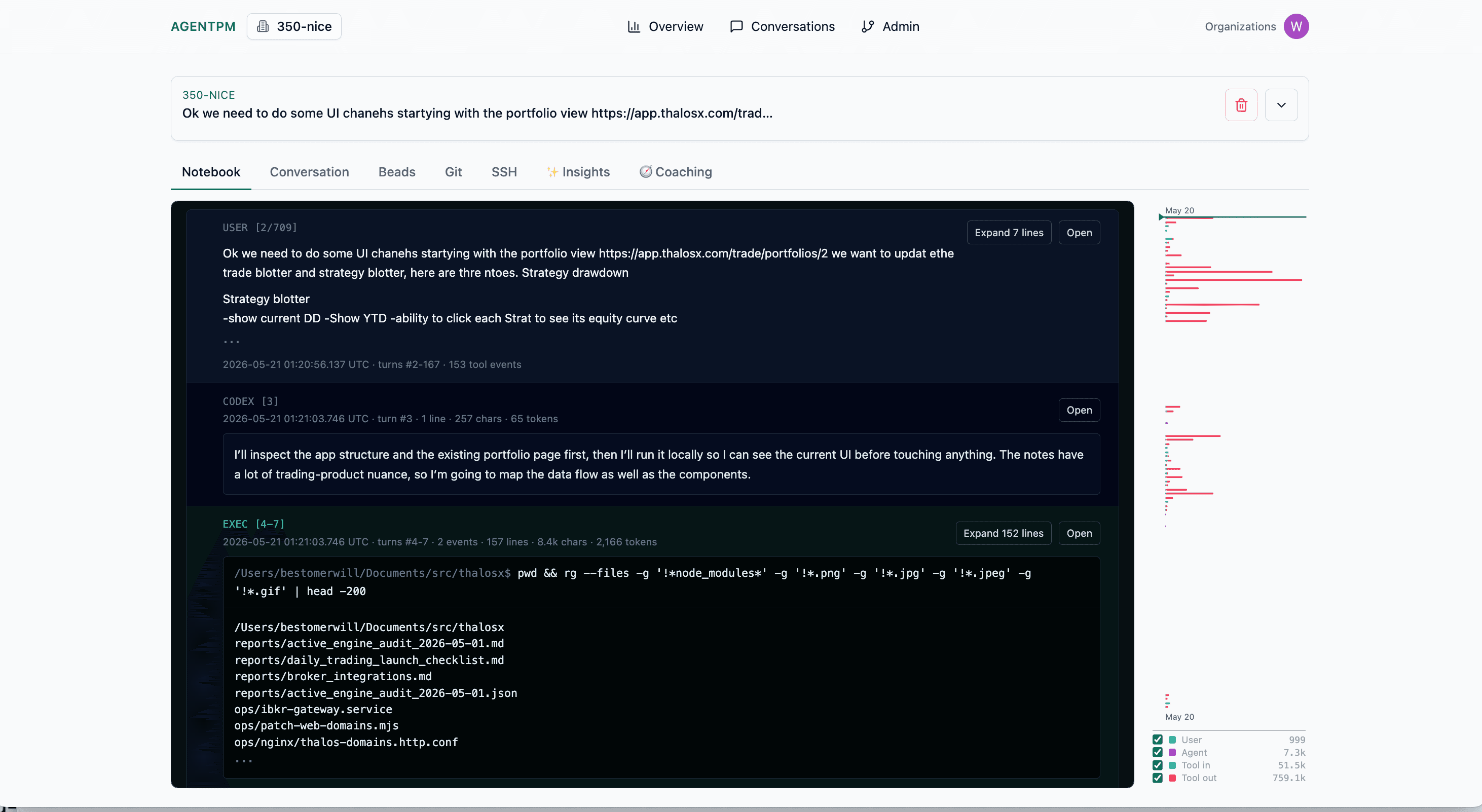
The terminal handoff is fast, but sometimes you want to look with your own eyes. AgentPM gives you a searchable notebook, conversation evidence, tool-call context, insights, and advice so you can inspect the full trail.
The notebook gives you the session itself: prompts, replies, tool calls, files, commands, and the surrounding timeline. It is the place to inspect what really happened instead of guessing from memory.
AgentPM turns long agent sessions into searchable decisions, outcomes, risky moments, unresolved questions, artifacts, and follow-ups. Each item links back to evidence so the next agent can trust it.
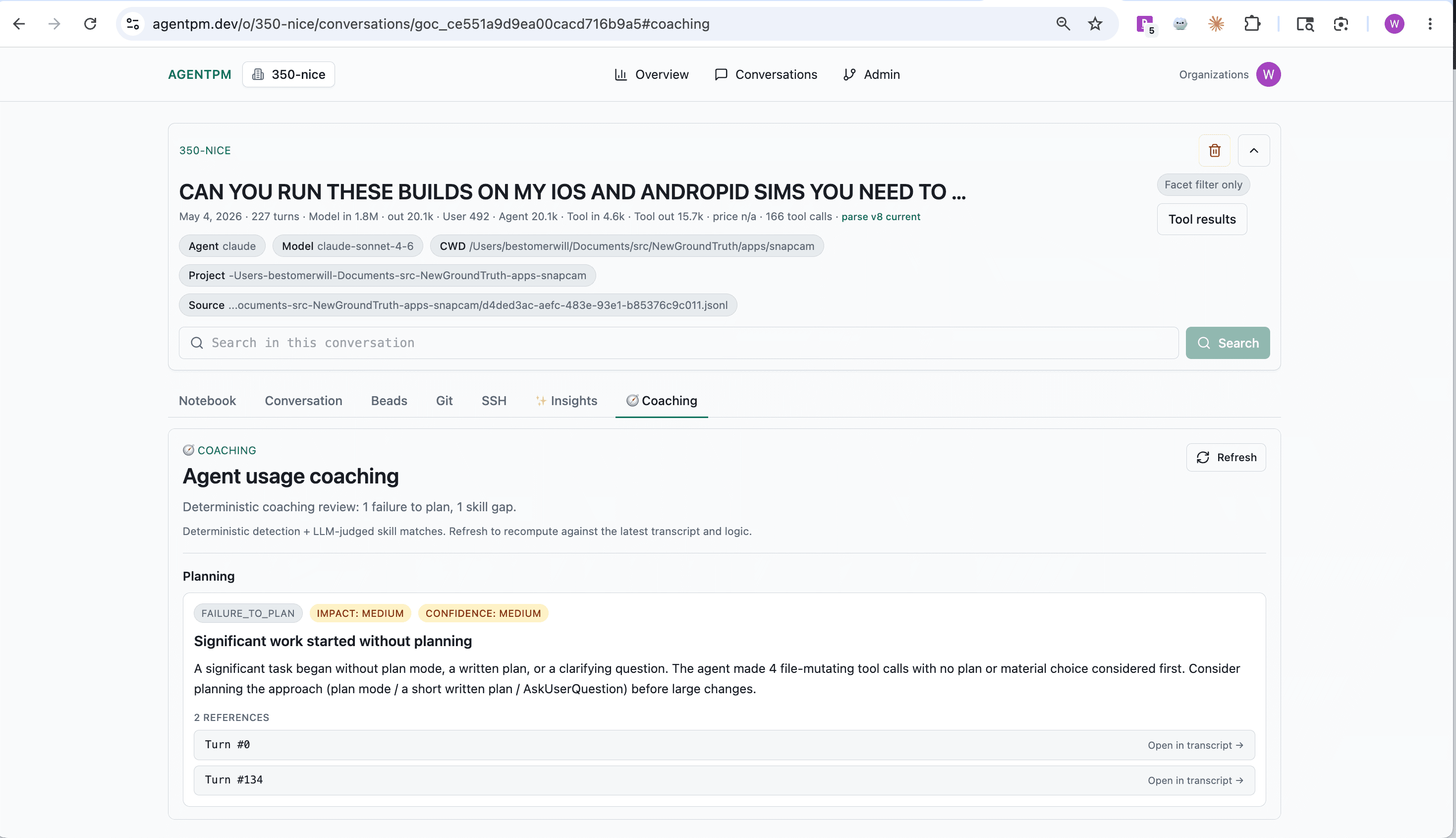
Advice surfaces the patterns that keep showing up across sessions, then lets you turn them into instructions the next agent can actually use.
You do not need a heavy process. When a session is long, stale, or moving to a different model, make AgentPM the first command before the next agent plans.
Run AgentPM before the new model plans.
Recover recent work, decisions, risks, failed checks, and open tasks.
Use the retrieved context to continue instead of rediscovering the same facts.
Open the web UI when you need the full notebook, tool calls, and source turns.
Let agents explore, edit, and ship. AgentPM keeps the context, evidence, insights, and advice close enough for the next model to continue with confidence.