Traceloop
AI application observability
Model calls, prompts, responses, latency, traces, evals, and runtime governance for AI systems.
// agentpm vs traceloop
Traceloop watches AI applications run. AgentPM watches software get built by coding agents.
Traceloop
Model calls, prompts, responses, latency, traces, evals, and runtime governance for AI systems.
AgentPM
Plans, commands, file edits, tests, retries, decisions, and the evidence trail behind software work.
// key differences
Both are observability products, but their evidence comes from different moments in the lifecycle.
// what agentpm captures
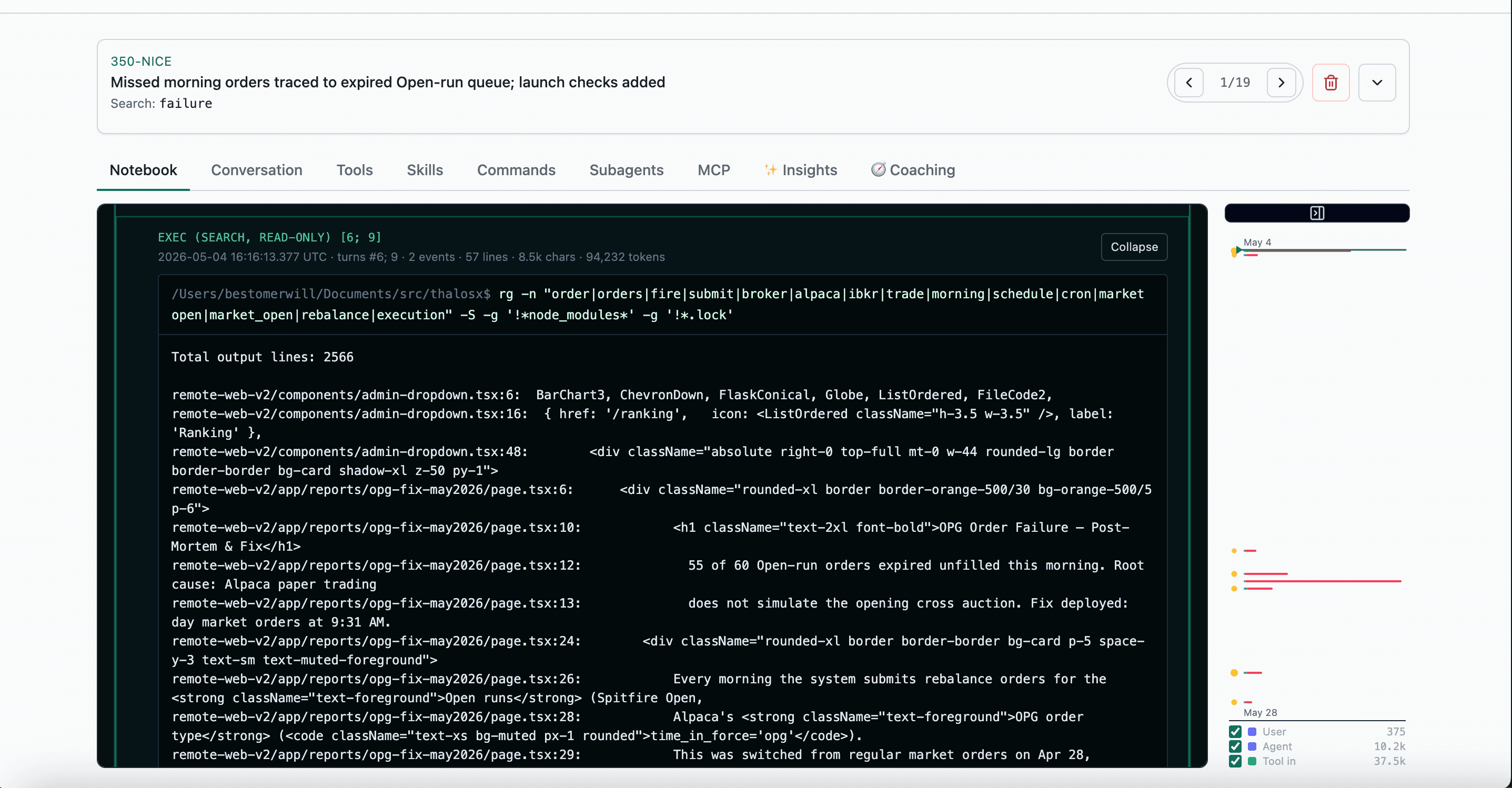
AgentPM captures the work trail that usually disappears between a developer's local coding-agent session and the final PR.
What the coding agent intended to do before editing.
The shell work, outputs, failures, and retries behind the result.
Which files changed and how the implementation moved.
What was verified, skipped, retried, or left unproven.
The route from local session work toward PRs and commits.
The why behind tradeoffs, reversals, and handoff context.
// compounded knowledge
Observability is not just about catching failures. The long-term value is turning repeated behavior into better future performance.
Customer context, prior interactions, feedback, and evaluation data help AI products become more useful, personalized, and reliable for end users.
Plans, commands, file edits, failed tests, reviewer feedback, and decisions become reusable workflow knowledge that reduces retries and improves future coding-agent sessions.
// summary breakdown
It is the right layer for production traces, model calls, prompt and response behavior, latency, evals, and monitoring AI systems after they are running.
It is the right layer for reconstructing how coding agents planned, edited, tested, retried, and decided while building software.
If your question is about model behavior in a deployed AI product, start with AI observability. If your question is about what coding agents did during engineering work, start with AgentPM.
// sources
These pages summarize public positioning from the adjacent tool and compare it with AgentPM's coding-agent work layer.